
Meta Professional Certificates: How to Study Them Free or with Financial Aid, and Eight Prompts That Turn Them into Real Projects and Jobs
An accurate guide to Meta’s professional certificates on Coursera (Front-End, Back-End, Data Analyst, Social Media Marketing): what is actually free, how to request financial aid, and eight prompts for choosing a track, studying and building a portfolio.
 Mulk Allah Al-Sadi7 min read
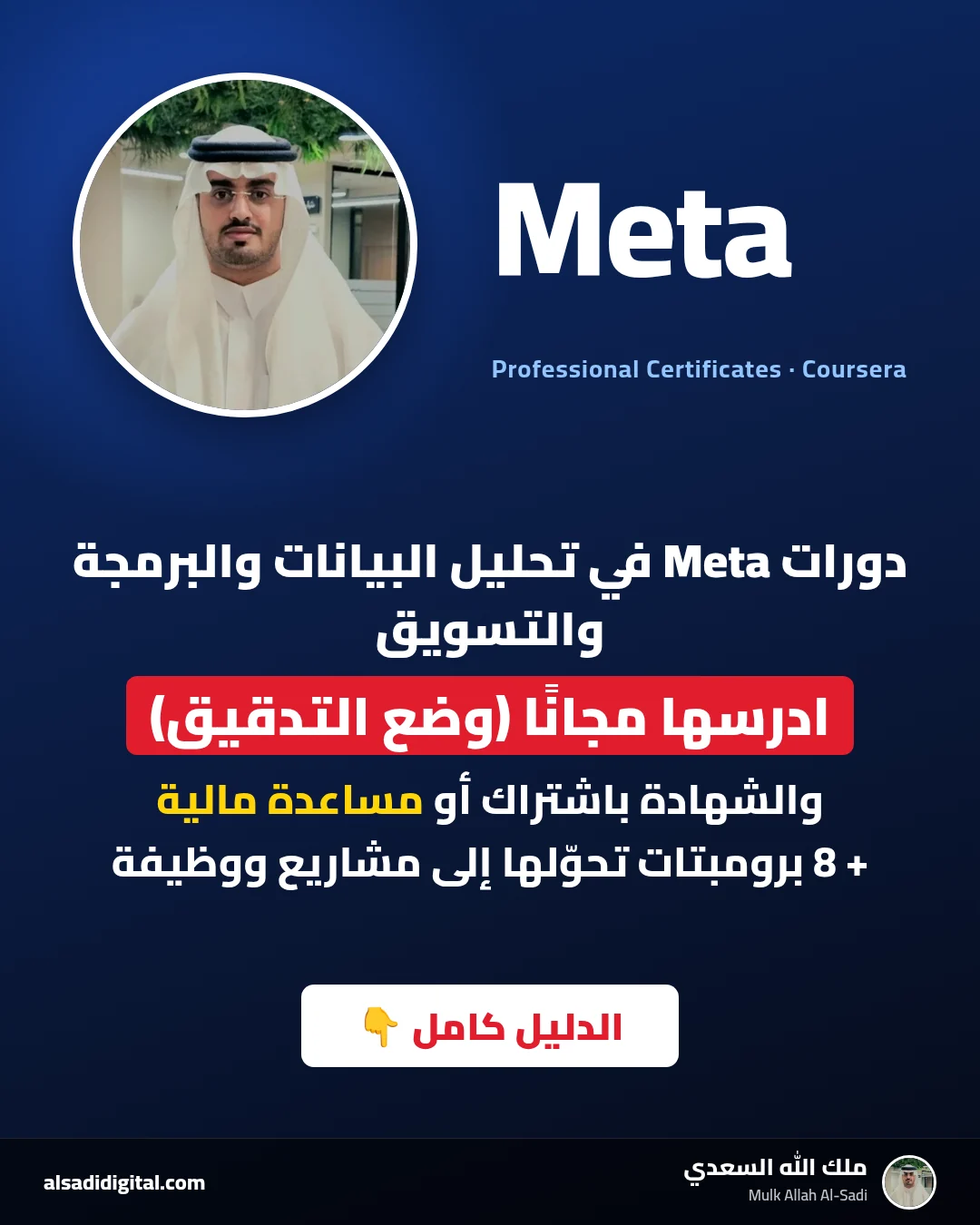
What you will get
You will learn exactly what you can study for free and what needs a subscription or financial aid, and leave with a study plan, an honest and well-structured financial aid application, a standout project beyond the course project, and a LinkedIn post that presents your achievement professionally.
You often see “Meta courses are completely free with a certificate”. The truth is more precise, and knowing it saves time and money. Meta offers several professional certificates on Coursera, gathered at coursera.org/meta-professional-certificates, including Meta Front-End Developer, Meta Back-End Developer, Meta Data Analyst and Meta Social Media Marketing.
According to Coursera’s official pages, you can audit the program’s courses for free: you see the content, but graded work and the certificate are not included. The certificate requires a paid subscription (usually after a short free trial) or Financial Aid, which you request per course from its page; review can take up to 16 days, and the application is cancelled if you start a subscription trial while it is pending. Each page lists the estimated duration and number of courses; the Front-End page, for example, describes a 9-course series.
If marketing is your focus, Meta Blueprint at facebookblueprint.com offers free learning courses on marketing across Meta’s platforms. In every case, the official page is the final word on prices and terms, as they can change.
The eight prompts
You are a career advisor specialising in tech paths for beginners.

I am considering one of Meta's professional certificates on Coursera: [Front-End Developer / Back-End Developer / Data Analyst / Social Media Marketing].

About me:
- Education and work background: [...]
- What I enjoy: [e.g. design, logic, numbers, writing]
- Weekly time available: [hours]
- My goal within a year: [job, freelancing, promotion, own project]
- My country and target job market: [...]

1. Ask me up to 3 more questions if needed, then stop.
2. After my answers, compare the two best-fit tracks in a table (skills, daily work, difficulty to start, what I must build after the certificate).
3. Recommend one track with 3 reasons and 3 risks.
Do not mention salary figures or employment rates.
When to use it: Before enrolling, if you are torn between certificates.
What to expect: Questions about your background and goals, then a comparison of the best-fit tracks and a recommendation with reasons and risks. Do not trust salary figures if it gives any; check local sources.
Help me write my Coursera Financial Aid answers for the course [course name] in the [certificate name] certificate.

My real information:
- My study or work situation: [...]
- My financial situation briefly and why I cannot pay now: [...]
- Why this course specifically and how it connects to my goal: [...]
- How I will use what I learn: [project, job, supporting my family or community]
- My time commitment: [hours per week]

Write two separate answers: (1) why I am applying for aid, (2) how the course will help me reach my goals.
Each 150-250 words, in simple, sincere English.
Rules: use only my information, do not exaggerate, and add no circumstances I did not mention.
When to use it: If cost is a barrier and you want to apply for Coursera Financial Aid for a specific course.
What to expect: A structured draft of your answers based only on your real circumstances, at a length that suits the form. Review and edit it in your own voice; never submit untrue information.
I will study the [certificate name] certificate on Coursera. Number of courses per the page: [number]; estimated duration: [duration].
My time: [number] hours per week.
My strategy: audit the courses free first to learn the content, then subscribe or use financial aid to complete graded work and earn the certificate as quickly as possible.

Create a plan:
1. A weekly table: course, modules, hours, mode (audit/paid), practical output.
2. When to start the subscription or request aid so I do not pay for more months than needed.
3. A small side project after every two courses.
4. Warning signs that I am falling behind and what to do.
When to use it: After choosing a track, to minimise cost: study what you can for free, then subscribe or use financial aid when ready.
What to expect: A weekly plan for the certificate’s courses that marks what to study in audit mode and what to save for the paid version (graded work and projects), with review checkpoints.
These are my notes (or the lesson text) from [course name], lesson [title]:
<lesson>
[paste]
</lesson>

1. Summarise the lesson in 5 points.
2. A terms table: term | one-line definition | example.
3. 6 recall questions: 2 recall, 2 understanding, 2 applying to a practical situation. Do not write the answers.
4. Wait for my answers, then correct them and tell me what to review.
When to use it: After each video or reading, pasting your notes or the lesson text available to you.
What to expect: A short summary, key terms and graded recall questions without answers, then corrections of your answers. It cements learning better than rewatching.
I am working on [course project description] in the [certificate name] certificate.
My current skills: [...]. Time for the project: [hours].

Help me make it stand out:
1. 3 ideas to connect the project to a real problem in [a field or community I care about].
2. For the best idea: 5 extra features from easiest to hardest, and which skill each proves.
3. A weekly implementation plan.
4. How to present it: title, 3-line description, what goes in the README, and which screenshots to take.
Make sure the ideas do not break the course project's requirements.
When to use it: When you reach a hands-on or capstone project, to make a standout version unlike thousands of identical ones.
What to expect: Ideas to turn the project into a solution for a real problem, extra features ranked by difficulty, an implementation plan and how to present it.
You are an experienced [Front-End / Back-End] developer reviewing a learner's code.

Context: exercise [description] from the [certificate name] certificate. Stack: [HTML/CSS/JavaScript/React or Python/Django...].

<code>
[paste the code]
</code>

Review by priority:
1. Bugs that break functionality.
2. Security and input handling.
3. Accessibility, or API design, depending on the track.
4. Readability, organisation and naming.
5. Performance.

For each note: the line, the problem, why it matters, and a hint toward the fix. Do not rewrite the whole file; I want to fix it myself.
When to use it: For Front-End or Back-End learners: after writing exercise or project code, before submitting.
What to expect: A review like an experienced developer’s: bugs, accessibility, performance and best practices, with the reason for each note, without rewriting everything.
You are a digital marketer teaching a trainee.

Business: [type, city, product or service]
Likely audience: [...]
Budget: [free / small amount]
Platforms: [Instagram / Facebook / WhatsApp Business ...]

Create a 4-week plan:
1. A customer persona in 6 points.
2. 3 core brand messages.
3. 3-4 content pillars with a sample post for each.
4. A weekly posting schedule.
5. Metrics to track and when to review them.
6. What to A/B test in week three.
Do not state expected results as numbers; I want a measurable plan.
When to use it: For Social Media Marketing or Blueprint learners: applying what you learn to a small real business.
What to expect: A realistic monthly plan: audience, messages, content types, posting schedule and metrics, without promised result numbers.
I completed the Meta [certificate name] certificate on Coursera.

What I actually learned: [3 skills]
The project I built: [description and link]
The hardest challenge and how I solved it: [...]
What I am looking for now: [internship/job/freelance]

Write:
1. A LinkedIn post of 120-170 words that opens with the project or challenge, not "I'm happy to announce", mentions the certificate as part of the story, and ends with what I am looking for.
2. Two CV bullets in the form: verb + what + tool + result.
3. 5 skills to add to my Skills section.
Use only my information and do not exaggerate.
When to use it: After earning the certificate and finishing your project.
What to expect: A LinkedIn post centred on what you built and learned rather than the certificate alone, plus two achievement-style CV bullets, all from your information.
Useful follow-ups
- "Which courses in this certificate overlap with what I already know, and how can I move faster through them?"
- "Turn the study plan into a daily task list for this week only."
- "Suggest 3 questions to ask someone working in this field before I continue."
Common mistakes
- Assuming the certificate is free, then finding the subscription started after the trial.
- Starting a trial while waiting for a financial aid decision, which cancels the application.
- Writing an exaggerated or dishonest financial aid application.
- Finishing the certificate without a personal project that sets you apart.
- Relying on outdated details from social posts; always check Coursera’s official page.
Quick workflow checklist
- Open coursera.org/meta-professional-certificates and read the page for your certificate.
- Choose a track (prompt 1) and make a study plan (3).
- Audit for free, and request financial aid if needed (2) without starting a trial.
- Lock in each lesson with a self-test (4).
- Build a standout project (5) and review it (6), or run a real marketing plan (7).
- Present the achievement on LinkedIn and your CV (8).
More articles

Stop Collecting Resource Lists: A 4-Week Roadmap to Learn AI Agents from Free Official Sources, Plus Eight Prompts to Build Your First Agent
“Top 50 resources” lists about AI agents get saved and never read. This guide picks just four free official sources, orders them into a four-week plan that ends with a small working agent, and gives you eight ready-to-copy prompts.
Mulk Allah Al-Sadi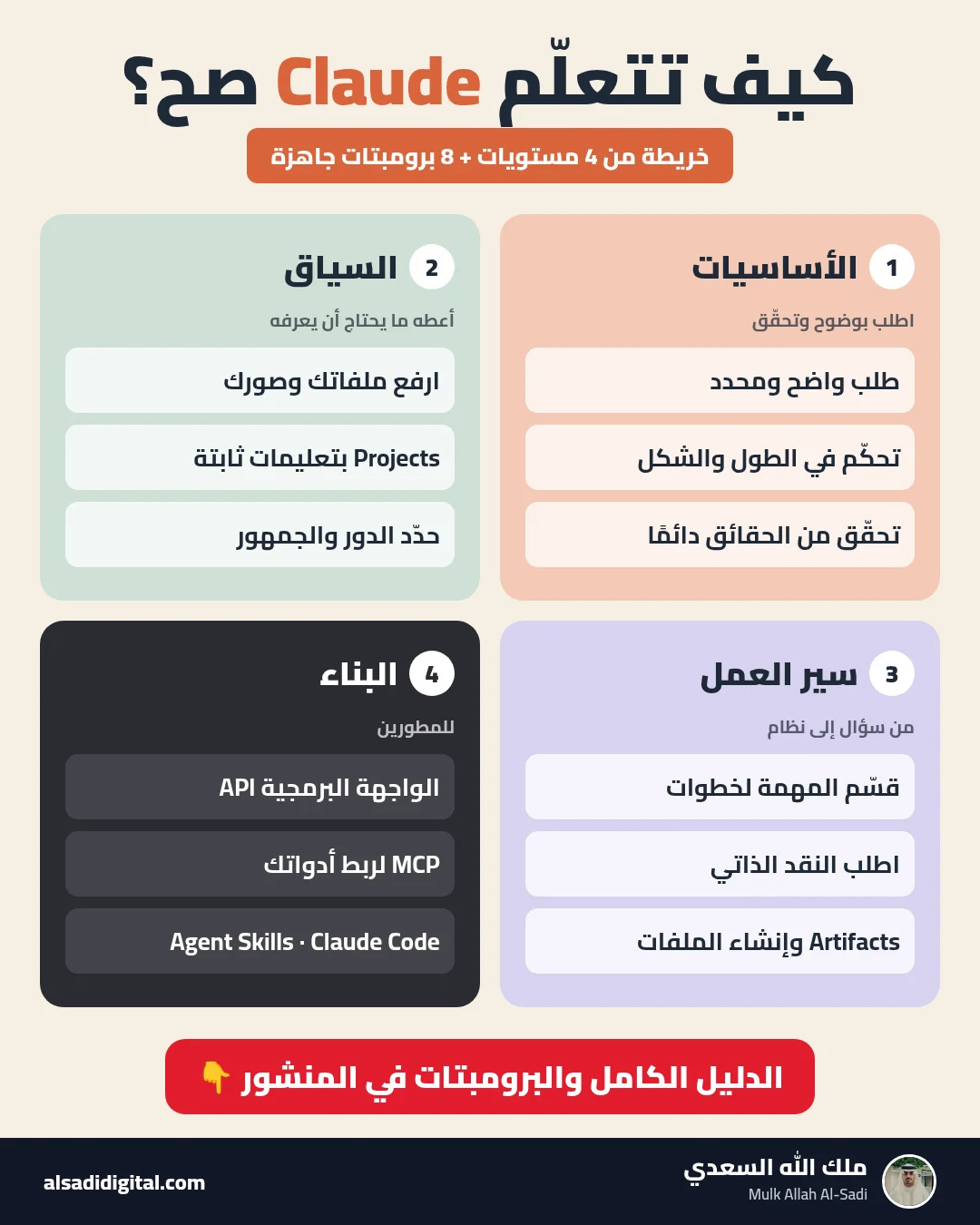
Learn Claude the Right Way: A Four-Level Map and Eight Prompts That Turn It into a Team of Experts
Skip the random experiments: a clear map of what to learn at each level of Claude, plus eight copy-ready prompts that make it work as your researcher, analyst, advisor, critic and tutor.
Mulk Allah Al-Sadi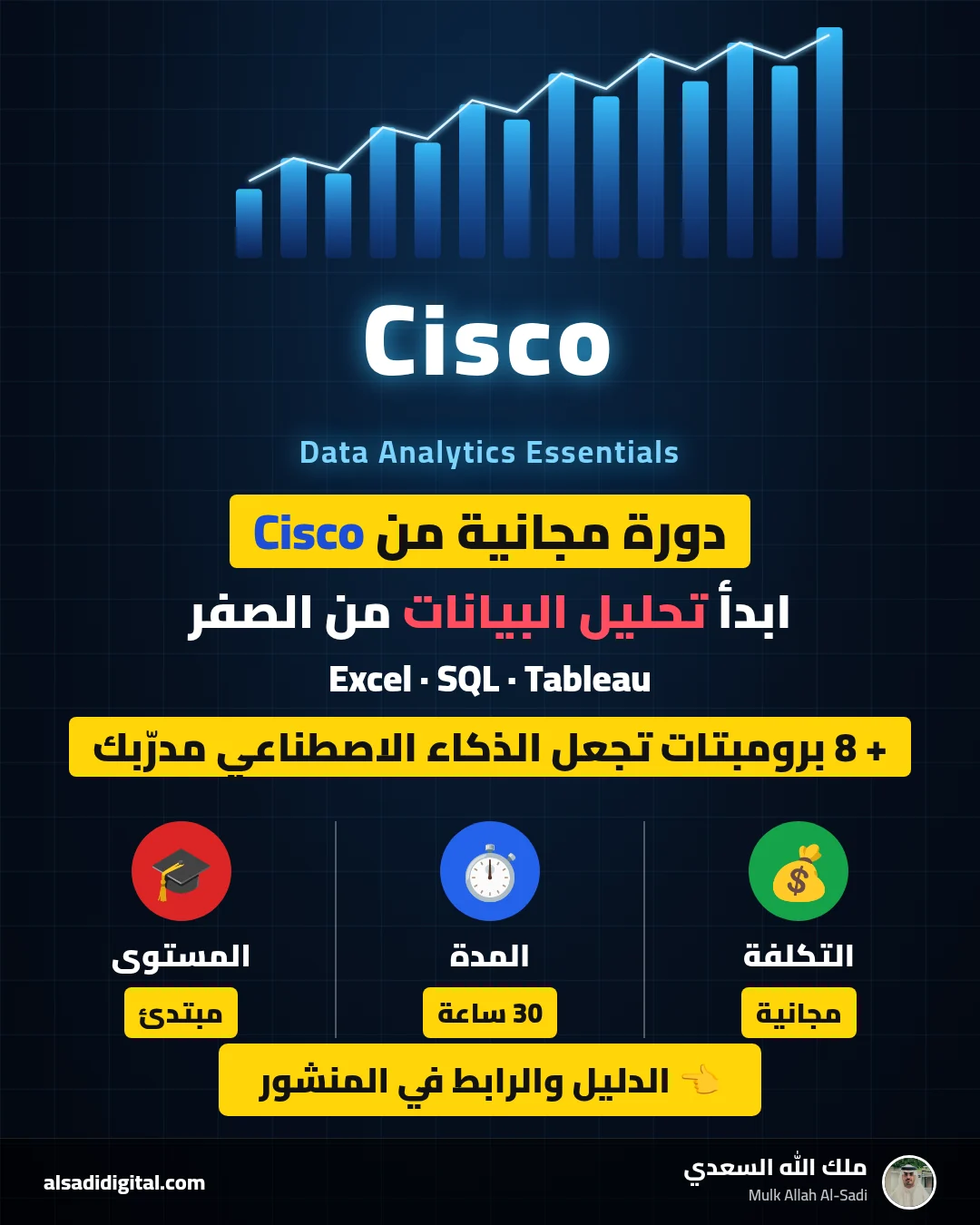
Start Data Analytics from Zero: Cisco’s Free Data Analytics Essentials Course and Eight Prompts That Make AI Your Personal Coach
A practical guide to completing Cisco’s free data analytics course (Excel, SQL and Tableau) with real understanding, plus eight prompts for studying, practising, publishing a GitHub project and preparing for interviews.
Mulk Allah Al-Sadi